Tuesday, August 14, 2012

A Natural History of Now

Hey! Got ten bucks burning a hole in your pocket? Enjoy nature? Like books?
Then check this one out:

A Natural History of Now: reports from the edge of nature is a new collection of non-traditional nature-focused writing, hot off the presses. I am happy to see my essay   
"No Country" in such fine company.

Order your copy from a local bookstore or internet warehouse today!


“An underwater Christ, how to lasso a kittiwake, Egyptian flies, bugling elk, a man who shoots poachers, vegetarians dismantling pigs. . . Welcome to a book far removed from the orthodox bucolic, mannered, and self-absorbed Nature Essay. These pieces are startling, funny, piercing, and often unforgettable. My advice: buy this book, eat it over the weekend, and then give it to someone who will dig it. Which will be everyone.” 

– Brian Doyle, author of Mink River


Sunday, July 29, 2012

In Pictures

Salt addict. (Body, not bath.)

Dutch Lake: For bears only.

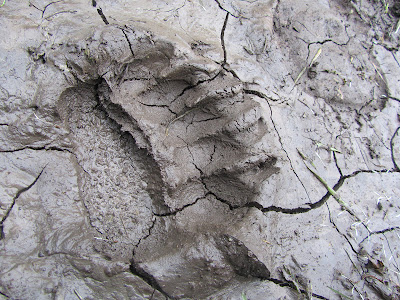
Evidence of a rub down.

The Huxtables.

Considerably more chill than their parents.

Shale-om.

Third Hitch Redux


Trail Creek. Sun. Hot, hot, heat. How level does the round really have to be to safely change a flat tire? Late start. Solo hike. Ridges and ridges, climbs and descents. Grouse chicks. Haiku. Hello little hares. Trio of salt-crazed fuzzy fiends in white high-tops. Kindly release my sweaty shirt. And that sock. And the water bottle, too. But there is room in my sleeping bag if you're interested in a cuddle. Up, up, up. Down, down, down. More water, more sunscreen, more pee breaks. Hello fat toad. So nice to see you again. Such a fine white etching down your bumpy back. Then thunder! Lightning! Rain and rain. Dinner cooked under cover of an outhouse foyer. I mean, that isn't so unsanitary, right? Just, hey! Don't let that touch the ground. At all.
 
Oh, Dutch. They laughed at me in the permit office. Why would you want to go up there? Your trail has officially been wiped off the map, but how the bears adore you. Fresh clumps of fur, swaying in the breeze, decorating every barb. Miniature incarnations. Great flood zones of flattened grasses, huge logs tossed up in loose-root tangles. Silver snags make the best bridges over waters troubled and calm. Bushwhacking through false azalea is like combing through skunk hair. Slip and fall, slip and fall. Five by ten feet is just enough of a patch for one small tent. Hammocks need no even ground. Large beasts wade through lake waters at night, waves lapping against ankles and shoreline. The flash bulbs of lightning, if we're being honest, do add a creepy onus as you peak out and look toward watery footfalls.
 
Park Creek. Long days. Many miles. And hair and hair and hair. And oh hey, bear. Good bear. Yes, we hear your huffing, no need to charge. Mountain called Rampage. Mountain called Church. A small cabin in an open meadow. Dinner in the dark. Old striped mattresses sag gently on loose springs. Every roll marked with a metallic whine. Is this a new backpack or a torture device? How much can a hipbone swell before their is true cause for alarm? A forgotten trail. So many downed trees, so many ankle-grabbers, so many stumbles and shin-smacks and flying forward falls, and where's the trail again? Are bruises contagious? Hello, big grizzly, don't mind us. Just passing through on the way to.... helloooooo huckleberries! Patches and patches and patches. Fat, shiny purple-black. Small, dusky blue. Two-handed gathering. Hunched backs, fingers and lips stained with juice, one for now, one for later. Nom nom nom. Can't. Stop. Gathering.

Home again. Dirty and smelly, salt rings expanding. Bruises darkening. Shower and eat. Eat again. Locate bell bottoms. Locate sequins. Its disco time. Night Fever. That DJ, the one with the fake Afro, he will tell you that there are no disco-era Michael Jackson songs. But if you are persistent, and if you are a lady, he will play one for you anyway. You may ask him up to six times. He will do it every time. You are all powerful. Tonight, you are fate itself.

Tuesday, July 17, 2012

Bad News Bears

As you may or may not know, I am spending another season collecting bear hair in Northwestern Montana. Every so often, whilst we are burgling the fur clumps left on our rub trees, a park visitor pops around the corner and asks if we can tell what kind of bear left that hair? The honest answer is no, not really. Black bears can be any number of colors, and at the end of the day, it is hard to tell for certain their fur from any shade of grizzly, unless it is that deep blue-black hue. That said, we can (more or less) safely say what kind of bear hair we are not collecting. In keeping with a series, here is:

A (partial) Guide to Recognizing Your Bears


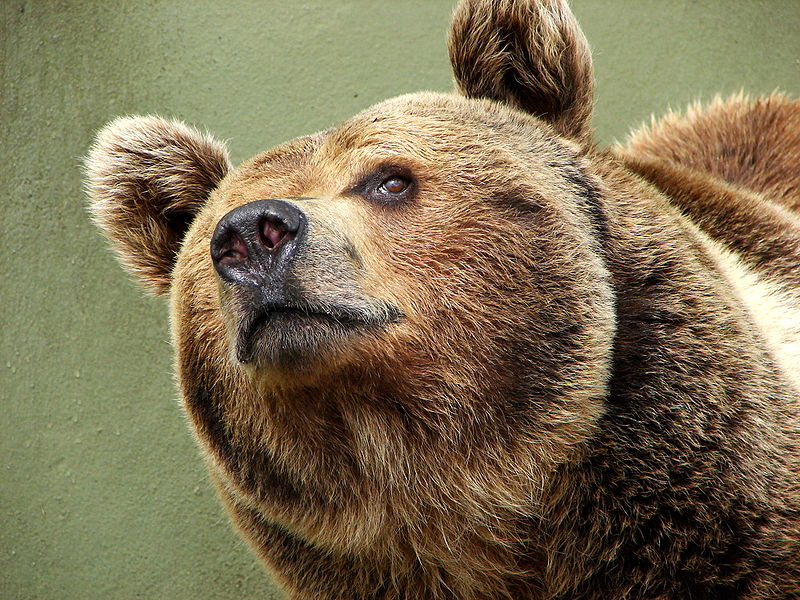
File:Darica Brown Bear 00963.jpg 


Brown Bear:
Range: Northern North America, Europe, Asia, Wall Street.
Diet: Lots of vegetation, berries, fruit, carcasses, fish, grubs. Mammals great and small, if it feels like a chase. Grizz eats whatever the hell it wants.


American 
Black Bear:  
Range: Behind you!
Diet: Mostly vegetation, berries, roots, grubs, fruit, honey. Also, carrion, trash, dog food, baking supplies, anything they can get their paws clawed on.


 1920x1440 Swimming polar bear                            
  Polar Bear:
Range: The Arctic.
Diet: Ringed, harbor, bearded, harp, and hooded seals, other blubbery marine mammals, including the occasional beluga whale. I said whale! 
Random fact: The biggest in the family, polar bears are so well insulated their body heat does not register on an infrared devise. This makes them excellent spies.


Asiatic Black Bear (Ursus thibetanius)Asiatic Black Bear:
Range: Mountain and tropical forests of Southern Asia, Northeast India, etc.
Diet: See American Black Bear.
Random Fact: These guys are largely nocturnal, and are called Moon Bears because of that crescent-shaped chest bling they sport. Dandies.

Sun bear1 Sun Bear As A Pet
Get it together, Sun!. You look like a Shar Pei with heat stroke.


Sun Bear:
Range: Rain forests in various Southeast Asian countries.
Diet: Typical jungle fare: honey, insects, veg, fruit, rodents.
Random Fact: Rarest. Smallest. Most ornery. Sun bears love slurping up honey and termites with their  crazy long, skinny, semi-creepy tongue.


  ~ ~ ~Intermission~ ~ ~


Sloth Bear
Hello, is it me you're looking for?

  Sloth Bear:
  Range: Forest and grasslands of India,
  Nepal, Bangladesh, etc.
  Diet: Mostly termites and ants (check out
  that schnoz), but anything will do.
  Random Fact: The Sloth Bear's Lionel
  Ritchie-esque   shaggy faux-mullet ear/neck
  fur help keep little insects away. And that
  ain't the half of it. They have long tongues,
  can close their nostrils and curl their lips
  over their noses, and lose their front top
  canines,  all to better suck up insects.
  Apparently their aggressive hoovering
  can be heard 300 meters away.


WWF Bolivia
                                      Not amused


  Spectacled Bear:
  Range: Northern and Western South
   America.
  Diet: Fallen fruits, palm nuts, orchid
  roots, honey, sugarcane, cactus.
  Random Fact: Closest living relatives
  of the epic Short-Faced Bear of
  Pleistocene fame. Named for face
  markings vaguely reminiscent of
  corrective eye wear.


Ready for my close-up


  Panda Bear:  
   Range: Southeast China. 
   Diet: Bamboooooo! Only bamboo.
   International poster bear for adorable.


care bears Care Bear:   
Range: Kingdom of Caring, Care-A-Lot, the Forest of Feelings, my first-grade birthday cake.                               Diet: Sugared cloud cones, the hopes and dreams of young children, mainlined love.

                                                     Bear Grass:                Range:Western North America                   Diet: Water, sunlight.

http://www.hottiesoftheday.com/males/celebrities/bear-grylls/beargrylls9.jpg


Bear Grylls:
Range: Atop Mount Everest, north-Atlantic icebergs, jungle ditches, free falling through mid-air, under piles of leaves, up in trees, on book stands everywhere.  
Diet: Raw organs, insects great and small, urine, deer shit, real vowels, and basically whatever it takes to SURVIVE!


no preview 


Gummi Bear:  
Range: Happy bellies and cavity-ridden mouths worldwide.  
Diet: You're not on one if you're eating these bears.


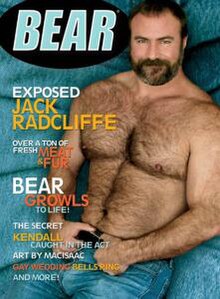
The Gay Man's Bear: 
Range: San Fransisco, Miami, D.C., New York,  Seattle, worldwide. 
Diet: Listen, what a bear eats in the privacy of his own home is no body's business but his own. 


Walter Payton Chicago Bears NFL Football Sweetness Most Prolific Runningback Running Back MVP Player year NFL Football Player 


Chicago Bear:  
Range: Chicago and fields away. 
Diet: Coors Old Style, chicken wings, deepdish, haters. Just check The Fridge. Ha! Then please, watch this! 
Gravity Is a Fact Everybody Knows About

The Waterfall
By Mary Oliver

For all the said,
I could not see the waterfall
until I came and saw the water falling,
its lace legs and its womanly arms sheeting down,


while something howled like thunder,
over the rocks,
all day and all night –
unspooling

like ribbons made of snow,
or god’s white hair.
At any distance
it fell without a break or seam, and slowly, a simple

 
preponderance –
a fall of flowers – and truly it seemed
surprised by the unexpected kindness of the air and
light-hearted to be

flying at last.
Gravity is a fact everybody
knows about.
It is always underfoot,

like a summons,
gravel-backed and mossy,
in every beetled basin –
and imagination –

that striver,
that third eye –
can do a lot but
hardly everything. The white, scrolled

wings of the tumbling water
I never could have
imagined. And maybe there will be,
after all,


some slack and perfectly balanced
blind and rough peace, finally,
in the deep and green and utterly motionless pools after all that
falling?

** Starring some of Glacier's most lovely falls in Kintla, Two Medicine, Many Glacier, Stoney Indian, and the Belly River areas. Sometimes my work is too good.

Tuesday, July 3, 2012

Evidence


Bear-hair hunting season is on. Inquiring minds want to know...

1. How many bears are in Glacier?
Most recent estimates put the number of grizzlies at a bit over 300, and black bears over 700.
Grizzly bear numbers for the entire Northern Continental Divide Ecosystem study area are closer to 1000 individuals. Black bears, about a bajillion.


2. What is that sound?
Sounds like a loon to me. Or the forlorn wailing of Skinny Guy, Glacier's creepier, lanky Bigfoot equivalent.


3. When is it going to stop raining?
In July. Oh, wait...


4. How many days does it take before trench foot actually sets in?
Well, according to my sources, jungle rot can get the party going in as little as thirteen hours. Luckily the evolution into full gangrene takes a bit longer. And all you have to do to prevent it is keep your feet dry and clean. Huh.


5. Are you going to eat that? 
Is that a trick question?

Wednesday, June 20, 2012

Reasons for and Advantages of Loving Your Local Hummingbirds


Rufous 

1. They are marathon migration champions. These little three-inch buzzers can fly the nearly 3,900 miles from Alaska to Mexico in a season. Broken down to scale, that measures out to roughly 78,470,000 body lengths, which is the mathematical equivalent of raging badass.

2. They don't take any @*$^#! Though merely thumb-sized, a rufous is fiercely territorial and will chase away much larger birds who try to get up in their grill. Even mammals are not safe. Chipmunks, beware.

3. Wings = Bonkers. Their wings frenzy between 52-62 beats per second. Our sorry human eyes register this only as a blur, our ears pick up the beating only as a loud buzz. Or hum, as it were. Also, they are the only group of birds who are able to fly backwards.

When in flight, hummingbirds have the fastest metabolism of any non-insect animal in all the world. Though tiny, their hearts beat ferociously within their breasts, at well over a thousand beats per minute. They hum like a race car's engine. They hum like a bumble bee on steroids. They hum, like a psalm. And should one zoom into your home, a little rufous, careless or curious, and rise to batter the window glass, buzzing and buzzing, she will somehow actually make you feel the one who is small. And when you run outside to find a silver, dented ladder, you will not care how sturdy its steps are, not when you see this bird grow frantic, then tired. When she climbs the glass and falls back, again and again, raising thin clouds of dust from the high sill, rustling dead flies, it will take all of your concentration to remain patient. To wait for your moment. To turn your thoughts away from what if. And so you breathe. And watch. And wait. At last, when held in your palm, in a loose cage of fingers that could easily crush, a hummingbird has a way of making you feel like a giant, bumbling creature, with all the grace of an old walrus blundering across a rocky shore. When held in the cup of your hand, a small heart beating fiercely registers only as a tickle, a faint kiss. The physical weight no more than that of a larger bird's feather. The cosmic weight, immeasurable.