Showing posts with label writing. Show all posts

Saturday, March 2, 2013

Where the Science Goes

I am very happy to report that I shall be a regular writer for the excellent and nerdy mini-lecture video series The SciShow. If you like learning about bizarre phenomena, famous brainiacs, current science news, and super awesome stuff, check out the YouTube channel. Recent topics have included: What happens when a body is subjected to the vacuum of space, how birds get drunk in spring, the history of blood transfusions, meteorite hits and near misses, giant squids, spider rain, genetically modified foods, and what happens if identical twins procreate with identical twins.

Oh, and my very first scripted episode on Extreme! Animal! Cannibalism! (Don't worry, there is a little bit of brother-eating, but no bath salts are involved.) I'm super excited about this gig and to be part of such a curious and creative team. Upcoming assignments range from Explaining Gluten, to updates on Human Enhancement Technology, to Why Do Cats Purr? Hope you'll check in on occasion and get your learn on...


Wednesday, September 26, 2012

Fact and/or Fiction

Remember that old fifth grade writing journal? Yeah, well it wasn't all opinion essays and seasonal poetry and Thoreauean pursuits. Oh, no. My young mind really stretched her legs in the free fiction assignments. Evidently these were not subjected to the normal litany of grammatical corrections. Sweet, sweet creative licence! Freed from the constraints of sane punctuation and responsible spelling choices, I filled pages and pages...

Ah, hello big, loopy pen(cil)menship, you old friend.
Fiction honorable mentions: the best and the worst:

"An Untitled Story set in the 'beautiful mountains of Lur'":
Here is an adventure tale about "friendship, bravery, and their rewards," starring a young, big-dreaming peacock named Farel, and his friends Skipper the otter, pheasant Spring, and badger Starling on a quest to prove themselves by rescuing a young foxed named Reese from the evil clutches of the local wood witch, an "ugly, dirty beast with red eyes and a crown of bones" named Velga. Along the way they help Potter, a frustrated bear cub retrieve a beehive, then devise a keen rescue plan clearly influenced by the Dorothy-rescue-scene in Wizard of Oz. Upon escaping, the friends run "all day and into the next without stopping or ever looking back". Naturally, a very annoyed Velga catches up eventually, but is ultimately thwarted by Potter's gang of bears, returning that earlier favor with the honey. And so one hand washes the other. The story veers into Just-So territory at the end, when the brave companions are rewarded with gifts like "a lovely white stripe down the back," "sharp white teeth," silky fur, sharp claws, yadda yadda, and, for Farel, "incredibly wonderful looking tail feathers that spread out. Annnnd a sharp beak." If that doesn't describe a modern-day peacock I don't know what does. Incidentally, my teacher asked that I read this little gem out loud to the class, though I have no recollection if I ever did, as I would have likely blocked out such a public-speaking event if I managed not to faint in the first place.


"Stone into Gold"
A heart-warming, if not cliched, tale about Draken the alchemist and his (male) apprentice Sarise. I have since wondered if there is a Johnny Cash-like song playing on the radio stations of Lur entitled Boy Named Sarise. Yeah, super manly. Anyway, naturally the pair's objective is to get paid, and it seems Sarise keeps messing up the secret gold-making recipe by adding too many drops of the golden frog's spit. The story features typical teen angst: "...at least there is something I can do," Sarise mumbles as he goes falconing for dinner, probably kicking a dandelion on his way out the door. When the boy returns in triumph with "three scrawny rabbits and a few field mice," there are culinary delights to be had: "While Sarise was out, Draken collected an assortment of magic herbs. (Though they were not truly magic, he had nicknamed them that because when mixed with oil, then rubbed on to meat it gave an irresistible flavor that tasted as if a magic spell had been cast on it.)" Move over Wolfgang, we've got herbed-oil on field mouse! Prepare to have your tiny mind blown. And because I liked a success story, you can rest assured that by the end young Sarise was clutching a small lump of gold in a victorious hand.

"The Eclipse"
A cautionary tale about the dangers of dabbling with drugs. DRUGS! I think this may have been my singular attempt at a genre other than fantasy. Alright, I co-wrote this story with my best friend Annie at the height of the anti-drug-barrage that was shoved down every elementary and middle schooler's throat in the 80s/90s cusp years. I confess that this particular story is not in my writing journal as I believe we wrote it in Annie's book, but I felt the need to mention it nonetheless. A group of friends try to stage an intervention when one of them finds "bags of drugs, including cocaine!" in her now ornery and despondent friend's locker. The reader will find herself on the edge of her seat as we ratchet up the suspense. Alas, the tale remains unfinished. Perhaps things just got too real.


"A Night's Howl"
The classic eleven page, two part saga about a pack of wolves, heavily influenced by my obsession with the wolf-riding-badass-forest-elves featured in my favorite comic book, Elfquest. Part one is a daring tale of rescue and vengeance. An evil human tribe has captured, and are on the verge of sacrificing, Quickpaw when his girlfriend and pack-mates storm in to save him. "The wolves caught the humans by surprise. Silk-ear let out a thundering howl and slayed two of the men in a fury." In the end they save Quickpaw amidst a bloodbath and conveniently take him to the pack's healer. When he is well enough to be reprimanded, the chief lectures him on the dangers of hunting alone. Strangely, the story then veers with an inexplicable "two months later" segue into a totally different plot line. A romance. 


Wendy and Richard Pini, we salute you!
"She had perky and aware ears, lovely, large eyes, a silky tail, and a graceful paws. She was slim, but muscular." Woo! Hot stuff! The unexpected romance between orphaned loner Moondancer and pack Lothario, Starjumper ignites the page as it brightly, if not painfully, illuminates my young brain's deepest desires. Naturally there is a bit of confusion amidst the hunting, pack introductions, and "festival of the seasons" dance invitation, but all ends well as the pair ultimately become life-mates, (canid equivalent of married with babies). ''...Since the two were both fascinated by the sky, especially the stars, they spent most nights on a large hill together, star-gazing..." I mean, they were named Starjumper and Moondancer.

I then essentially re-told nearly the same story with elf characters, in what I now clearly see as straight-up fanfic, though at the time I had no idea such a thing existed. Here again we witness the first encounter between orphaned loner Stardrop (who had been living in a cave with her wolf friend for God knows how long) and pack Lothario, Skywise. Ahem. Here's some soul-bearing: What you have to understand is that for several years (and arguably yet today) I wanted to be a wolf-riding, bow-shooting, leather-wearing, tree-climbing, human-killing, telepathic, sexy forest elf. I'd stop at the comic shop on the way home from school and stare lovingly at the Elfquest books on the shelf, almost afraid to touch them until I'd saved up the twenty dollars to bring the latest one home with me. Because these elves had only four fingers, I would actually tape my pinky under my hand to see what I would like with elf hands. I spent hours sketching out my intended outfits made of soft, tanned hides. I mean, I had it bad. Stargazing bachelor Skywise is an actual character in Elquest, and in the great fantasyland of my young mind, I wanted to be the object of his affection. Namely, a beautiful, mysterious, elf named Stardrop. I needed to create a story to arrange their introductions, and so I did.

My sappy yet earnest story ends with a to be continued... and reading it again, so many years later, I couldn't help but wonder what those crazy elves were up to these days. Because you know, I actually do miss them. And in the end, that is the great power of fiction. Whether you're reading it or writing it, it allows you to suspend your disbelief, flex your imagination, slip into the skin of a wolf, or peacock, or unfortunately named apprentice. In paging through this old writing journal its like I am actually witnessing my personality form. Though I was a cautious and shy kid, I think I must have felt fairly fearless when writing. I didn't worry what anyone else thought, I wrote for myself, freely. It opened my mind up. Rediscovering this has been a gift. Okay, a slightly embarrassing one.

Monday, September 24, 2012

No Cornhuskers Here

My review in the September/October issue of Orion magazine.

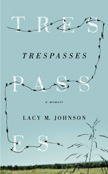
Johnson_web.jpgTrespasses
By Lacy Johnson
University of Iowa Press, 2012.
$19.95, 139 pages.

Cornhusker. Cletus. Hillbilly. Honky. Redneck. White Trash. “We are not that,” says Lacy Johnson’s unconventional memoir Trespasses, which documents how race, gender, and class shape collective identity
in the rural Midwest. The book reads as a family diary might — a braided series of poignant vignettes woven together with the thread of place. Johnson’s tone, technique, and voice vary with each microchapter
as she shuffles between subjects, jumping back and forth in time, momentarily pausing to shine a light here or there between three generations and two families. Her prose is languid and poetic, half memory, half dream. If the book had a soundtrack it would be one of rural ambiance — cicadas, lawn mowers, tractors flexing in mud, the soft whir of a metal fan, the creak of a floorboard underfoot.
        Johnson wants to tell us the story of her family, a people who’ve spent the last 180 years in a single small Missouri county; but during a series of family interviews she finds at a certain point that “the facts got in the way of the truth.” Getting answers was difficult. “The silence can’t be broken. Or it can be broken, but not by asking questions. Not by asking them again in a different way. Not by telling stories about galvanized tubs, or blackberries growing wild along the fence line, or a bridge in the forest made entirely of fallen trees.” And so rather than merely chronicle, Johnson begins to shape-shift. By inhabiting the lives of her parents and grandparents, she lives into their experiences, trying to make sense of the impact a single day or moment can have on a family’s memory.
         Johnson speaks to being marginalized as a poor, rural, white person — a “marked, racial, and degraded form of whiteness”— white trash. Growing up, Johnson wore homemade clothing. She knew she was poor, but she didn’t think of her family as being trashy in any way. Readers will agree. The people she depicts are hardworking, resourceful, and often unknowingly poetic. (Poetic too, that her roots are deep in Missouri, a state struck by its own identity crisis when the Civil War literally split it in two.) But Johnson’s own view was, and to a large extent still is, inconsistent with how others saw her. Even after earning a PhD and losing her accent, Johnson still struggles with determining who she is and where she belongs when a woman in the checkout line “who could be [her] grandmother” eyes her tattoos and pregnant belly, and mutters trash under her breath. Johnson wrote this book to help reconcile her own identity, for herself and for her children.
        “You know, we can never start with a blank slate,” her new (and first) black friend confesses. “You and I can never start from scratch.” She is of course referring to a racial barrier, but Trespasses itself is a testament to how that statement is truly universal. The author has internalized her own genetic memory, childhood, and socioeconomic mark just as her parents have before her, just as the reader has, and all instincts and judgments are in part informed by this collective memory. No one ever truly gets a clean slate. You’d best make sense of where you came from. Johnson knows this, and succeeds.
                                                                                                                                        — Kathleen Yale

Wednesday, September 12, 2012

Content A, Mechanics C

Yep, here she is. Check it, there is even
 a unicorn on the cover. Wide-ruled, baby.
Content A, Mechanics C was pretty much the standard grade subtitle to all my early middle school writing assignments. Coming from Mrs. Boschulte and her perfectly coiffed shoulder-curl hairdo, this meant I had good style, but sucked at spelling and punctuation. Huh. I was recently reminded of this fact when I uncovered my fifth-grade creative writing  notebook, in all its big, penciled cursive glory. Given that this was a legit class notebook, and I have been spared the horrors of revisiting my personal hide-under-the-mattress journal of said pre-adolescence, I thought I'd share some of the gestalt of young Katie. Weirdly, it seems I remain eerily the same...only now I get to do and think half of this stuff professionally. Okay, semi-professionally, like a casual Friday. I don't know if that means my soul settled early on, or that I'm just boring.


Non-fiction honorable mentions:

"What I am Thankful For" (Thanksgiving pre-game warm-up)
Poetic Highlights:
"I am thankful for the stars and the moon and the joy that rainbows and sunsets bring. I am thankful for the smell of autumn, for a burning fire, and for snow-covered trees. I say thank you for my dreams..."

"It's Not Just a Monster Anymore" (an essay about personal fear)
Choice highlights:
"Now I am more afraid of things like war and nuclear missiles and powerful yet evil leaders (like Saddam Hussein.) I also fear poverty and pollution. Endangered animals are always on my mind, along with the destruction of the environment, ozone layer, ocean, etc..."

"Proud to be Fit" (in preparation for a visit from Arnold Schwarzenegger)
Highlights include:
"Exercise should be an important part of our lives, especially for over-weight people. If you are planning to start skiing, stretching, biking, dancing, swimming, jogging, walking, or aerobics, here's some advice. Start slow, don't over-work yourself at first, it can really give you a muscle ache."

"Autumn"
High point:
"The leaves have beautiful colors, their loveliness matches the dusty painted sunsets. Autumn feels cozy and comfortable, the earth seems so peaceful, like a baby sleeping in a bed or like a downy owlet."

The Main Event. This is my eleven-year-old self vibrating at her true frequency.
An essay about New Year's Resolutions (with footnotes):

"In the past I have not made a New Year's resolution, but this year something came up*, (I was asked to write some resolutions of mine.) So here they are.

First I resolve to spend more quality time with my family. I believe that families and love from families are one of the greatest treasures on earth. Therefore I will extend my relationship with my family further.**

I will make it a point to take my interests and desires more seriously, such as spending time alone and letting  my mind ponder in silence. Learning, thinking, and imaging about animals, stars, the ocean, trees, flowers, nature, unicorns, elves, trolls, etc... Do more quiet and relaxing things like for an example, reading a book under a tree in the cool shade.*** I intend to absorb wildlife and its' ways silently.

I intend to begin to write more, and sketch pictures, then hopefully begin to write a book. In the time I'm writing the book I will be open to more ideas.**** I shall study things that might prove useful topics in my book: animals, elves, unicorns, trolls, fairies, sprites, magic and such things.

Those are my resolutions. Now just one question remains. Will I keep them? Well I'll tell you I will try with all my might!"

* It is as if even then I was rolling my eyes at the assignment. 

** One might wonder what other things my fifth-grade self might have been doing other than mostly hanging out with family. My favorite part about this paragraph is when I move past the greeting card propaganda and consciously decide to renew the familial contract for another year.

*** Isn't this fantastic? I want to ponder. Alone. In silence. And when I've had my fill of that, I'll move on to more relaxing things, like book-reading in the shade, birdwatching, and knitting a death shroud. It sounds like I am planning on moving into a nursing home. Still, this is when I most love the young me. I want to hang out with this kid, stalk the local deer, pick berries, count stars and get weird.

**** Really, I am totally open to any ideas you might have on troll genealogy, functional elf fashion, animal behavior, the physics of fairy flight, what exactly did happen to the unicorns. And such things.

But you know, all joking aside, that final question still remains, and it is kind of like the ghost of journal past is poking me in the ribs. Hard. She still needs to be reminded and encouraged to take her interests and desires more seriously sometimes. And it is both validating and unnerving how similar my resolutions today are to those written two decades ago. Well, minus the trolls.


Monday, September 10, 2012

Luis Alberto Urrea is Totally Rad


Click here for my latest review in High Country News.

Luis Alberto Urrea is, among other things, Orion's newest columnist, and Queen of America is his follow-up to the most excellent The Hummingbird's Daughter.

Preview his chops:

 “For she knew no connections but the most ethereal. She had learned that life on earth was a dream, and not always a good one, and that the morning would come and she would awaken into death and she would be among her lost ones and the deer of the flower home and she would wonder what had happened to her and why it had happened. And she knew that God would never answer her.”


Then read both books. And then get lunch. 


“He drooled like a dog when the chiles rellenos were searing on the flame, their caustic smoke announcing them to the world, their fat bellies gurgling with yellow cheese as they wore their egg-batter coats into the frying pan.” 

Tuesday, August 14, 2012

A Natural History of Now

Hey! Got ten bucks burning a hole in your pocket? Enjoy nature? Like books?
Then check this one out:

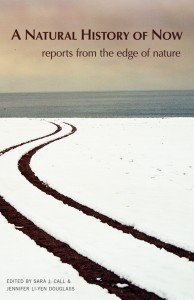
A Natural History of Now: reports from the edge of nature is a new collection of non-traditional nature-focused writing, hot off the presses. I am happy to see my essay   
"No Country" in such fine company.

Order your copy from a local bookstore or internet warehouse today!


“An underwater Christ, how to lasso a kittiwake, Egyptian flies, bugling elk, a man who shoots poachers, vegetarians dismantling pigs. . . Welcome to a book far removed from the orthodox bucolic, mannered, and self-absorbed Nature Essay. These pieces are startling, funny, piercing, and often unforgettable. My advice: buy this book, eat it over the weekend, and then give it to someone who will dig it. Which will be everyone.” 

– Brian Doyle, author of Mink River


Thursday, June 7, 2012

Breakfast With the Lord High Chancellor

You know, there is a lot of crap writing out there these days. It gets undeserved attention. This annoys me. If I hear one more thing about Fifty Shades of Gray I think I might buy a copy, just so that I might release it into the wild, with the hope that its chances for survival are at least as good as that clandestine goldfish after the flush. Blech. May its papers rot amidst the trees who created them. Anyway, you might imagine then, my delight to hear some truly wild, great, effecting writing read this past weekend when David James Duncan headlined The Whitefish Review's (a little up-and-coming non-profit literary journal) WILD Issue release party on Saturday night. You can read Cherish This Ecstasy, one of the brief essays he read,  here. It involves falcons mating with hats, ornithological-related wet dreams, Dostoevsky, divorce, and the inescapable act of being loved. Seriously, do yourself a favor.

I've admired David for a long time. I think he is one of the great new and unlikely spiritual leaders of our time--master of fearless reverence and irreverence. We've corresponded a bit for a couple of years now, but had never met in person, so I was exceedingly pleased to share breakfast with him the next morning--and even more delighted to find him just as intuitive, hilarious, open, and eloquent in person as his words would have you believe. It didn't matter if we were talking about dam-removal related death threats, or the amorous affairs of a certain legendary writer, or baseball positions, or politics, or cheese. I would have been happy to talk to him about anything. Certain people write the words, think the thoughts, see and feel the things, the great and terrible things, the beautiful mysteries...the grace... that make the world better. Make me better. These rare people don't just feed souls, they make them glow. Its no wonder they band together, drinking wine late into the night, armed with fishing poles and butterfly nets and worn-out boots. Orion has been bringing these voices-in-the-wilderness together for years in a poignant alchemy. Too many to name here. Desert wizards, mountain prophets, river bards. I remain eternally grateful for my time at that magazine, and for the opportunity it gave me to meet some of these people off the page, and even call them mentors, better yet, friends.

There is a lot of dark stuff happening in the world. Lately, sometimes when I turn out the light my heart begins to beat wildly against my ribs and I cannot sleep for all the face-eating, mining exploration, massacres, and legislated denial of a person's right to love. Haters. I lose my wits. And now this! It is a lot to take. The heart needs regeneration. A vacuum creates new space that longs to be filled. All is an Ocean.

Read that essay. For real, its all in there:

"...Or like the lone female loon who mistook a wet, moonlit interstate for water and crash-landed on the truck-grooved pavement of the fast lane: loon to whom I sprinted, as a convoy of eighteen-wheelers roared toward her, throwing my coat over her head so she wouldn't stab me, pulling her to my chest as I leapt from the concrete: loon who, when she felt this blind liftoff, let out a full far-northern tremolo that pierced, without stabbing, my coat, ribs, heart, day, life. All is an Ocean, she and Father Zossima and the avian choir keep singing as into black holes in trees, truck routes, river ice, frigid hearts, ecstatic birds keep dropping. Till even alone and in the darkness, with no special hat, clothes or wings to help me fly up and feel it, I find myself caught in the endless act of being loved..."

Friday, April 27, 2012

Fun With Feathers On Screens

iPad Screenshot 1Hey! Do you like birds?

Do you possess and enjoy touchscreen digital technologies which sometimes flash the icon of a half-eaten apple? Do you like to learn new things and listen to nature sound effects while riding the train, waiting for the elevator, or zoning out during a meeting?

Maybe you have some kids? Maybe they like birds. Maybe they like screens. Maybe they are always pestering you about your precious iDevice? Maybe they often point to the sky, or to the woods, or to the sea, demanding to know who guy?!, what bird is that?

Wouldn't it be nice if there was some sort of inventive and interactive game that helped kids get tech-savvy at the same time they were getting nature-savvy? If there were a way to help them recognize birds on telephone poles during road trips? Or help them to identify the call of that owl that is always hooting outside their bedroom window? Or teach them why they will never meet a condor nosing around their birdfeeder, cracking seeds?

But wait! Such a magical game does exist!

iPad Screenshot 2Check out award-winning Birdcage Press's new virtual game My Birds of Prey from their up and coming digital division, 5 Ravens. I have collaborated with Birdcage for several years, researching and writing educational text for their wildlife books and card games, helping to get kids excited about animals. Following seemingly universal trends, the publisher is now branching out into new digital worlds. Having always favored the feel of paper in my own two hands, at first I was skeptical. Then I saw My Bird World, created in conjunction with The Cornell Lab of Ornithology, and was thoroughly impressed. As an adult I had fun playing the games, had fun learning about the birds and their vocalizations. I was thrilled when the publisher asked me to write some of the text for their new raptor game, which just came out last month, and is gorgeous.

Whether you have kids or not, if you have a touchscreen device, a few extra bucks, and an interest in birds, please think about heading over to the Apple store, making a few clicks, and purchasing one of these games. I promise you will learn something new. And enjoy it. And, ahem, help keep this freelance writer in job security...

End of pitch. Thank you. And good night.

Tuesday, August 2, 2011

Bird's the Word

Birds. They're everywhere. Peaking in your window. Hammering on your rain gutters. Pooping on your windshield. Stealing your hotdog at the beach. Making jumpshots for the Celtics. What a pain. Just who are these avian terrors anyway?

But wait! Help is on the way! Next time your kid, or your neighbor's kid, or your neighbor's neighbor's kid is pointing their pudgy little fist at the sky, or toddling toward a flock of ducks, swinging a bag of stale bread, asking you who is that bird?! while trying to grab it by the neck, you can whip out these new sweet, sweet book-game combos, fresh off the presses and authored by yours truly, and learn all sorts of bizarre and average facts.

The pitch:

Birdcage Press is an award-winning children's book and game publisher. I have been researching and writing text for their wildlife series for a few years now, and highly recommend their educational products which stimulate memory, concentration, and strategic thinking, while teaching kids all about animal behavior and habitat.

Backyard Birds and North American Birds were created in association with the Cornell Lab of Ornithology (which, incidentally, has a badass website worth checking out), and are filled with wonderful images from leading wildlife photographers. Bird lovers will enjoy getting to know their local birds. Playa haters will enjoy gathering new information with which to taunt their feathered foes, such as "hey heron, what's up with the projectile vomiting?"


You Know You Want It

My latest book review for High Country News.
Good stuff.

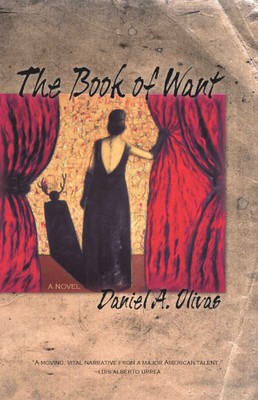
The Book of Want: A Novel
Daniel A. Olivas
144 pages, softcover: $16.95.
University of Arizona Press, 2011.

"I want ... I want everything. Everything that makes life beautiful." So says Conchita, one of the many characters in Los Angeles writer Daniel Olivas' The Book of Want. That Conchita is a voluptuous, amorous, unmarried 62-year-old with a penchant for tamales in the morning may tell you something about the world of this novel. The fact that her new boyfriend, Moisés, the widower next door, can levitate, or that her chain-smoking dead mother, Belén, visits her at night will tell you even more. Not to mention the notion that God sometimes communicates through a chicken.

The grandson of Mexican immigrants, Olivas is emerging as an important voice in the social and magical realist tradition of Luis Alberto Urrea, Gabriel García Márquez and Sandra Cisneros. In his sixth book and first novel, Olivas writes about the hard-to-explain and the miraculous. He explores loss and pleasure, the hunger for knowledge, questions about identity, sex, love, truth, money, transcendence.

The Book of Want is a tapestry of braided vignettes. The same scene may be described twice, from different perspectives. At times, the reader feels as if she is Belén, the omnipotent family matriarch, peering down at her progeny from heaven, watching their lives unfold, occasionally swooping down into their dreams to offer advice or warning. The plotlines are loose, fast and unpredictable. Some stories feel resolved; others leave you wanting more. Olivas plays with his narrative form, employing the techniques of meta-fiction: Witness the behind-the-scenes interview transcript between a reporter and some of the novel's fringe characters. Elsewhere, he writes out conversations via text-message, and in the chapter titled "How to Date a Flying Mexican," he breaks the narrative down into a series of rules. Rule number three: "Do not conduct Internet research on your lover's levitation skills. What you find will only cause great agitation and make you perspire profusely. Sometimes controlled ignorance is the only way to get through life." Olivas' prose is rich but simple, colorful and sometimes irreverent -- as whimsical and likeable as his characters. You will find yourself rooting for these people; you will even find yourself wanting for them.         --Kathleen Yale

Monday, June 20, 2011

You Got Me Buggin'

Looking for a summer thriller for the beach? A shiver-inducing read that will keep you up at night? A tale of murder and intrigue? Another reason to hate those mosquitoes swarming your gourd at this very moment?
Look no more.

Peep my latest book review for Portland's
The Oregonian.

WICKED BUGS
Amy Stewart
Algonquin Books of Chapel Hill
$18.95, 272 pages

"Hot and smoky, almost irreverent. Imagine W.C. Fields extinguishing a cigar on your tongue." This is not the colorful marketing slogan for an off-brand Texas hot sauce. It's pain connoisseur Justin Schmidt's description of a yellow jacket sting, ranked 2.0 on his Schmidt Sting Pain Index. And it doesn't actually sound so bad when compared to the "pure, intense, brilliant pain," of a level 4.0 bullet ant bite, akin to "fire-walking over flaming charcoal with a 3-inch rusty nail in your heel."

Intrigued? Read on.

For every human on Earth there are roughly 200 million insects. "We are seriously outnumbered." Amy Stewart respects that. She understands that insects do good. She knows they are integral parts of the food chain, that they pollinate the plants we eat and keep soil healthy. She knows we could not live without them. But she didn't write a book called "Wicked Bugs: The Louse That Conquered Napoleon's Army & Other Diabolical Insects" to extol their virtues. She wrote it to chronicle their most dastardly deeds. She wrote it to make you shudder and itch as you learn how the smallest of creatures can decimate forests and crops, collapse cities, thwart armies and inflict horror-movie levels of pain, suffering, festering disease and gruesome death upon millions of humans, while changing and shaping the course of history. She wrote this book to scare the bugs out of you.

Stewart is not an entomologist, but she is a consummate storyteller with a curious mind. Well-researched and written with characteristic wit, whimsy and reverence, "Wicked Bugs" is the perfect companion to her sordid 2009 best-seller, "Wicked Plants." Accompanied by Briony Morrow-Cribbs' gorgeous entomological etchings and drawings, the book is arranged in alphabetical order by species, and then divided into five dubious categories: Horrible, Painful, Destructive, Dangerous and Deadly. Each brief chapter offers up some fresh new hell.

And rest assured, there is something for everyone. Hypochondriacs will be pleased to know that those chronic headaches could be caused by a tapeworm curled up like a tumor inside their brains. World War II buffs will be delighted to learn of Japan's aborted operation "Cherry Blossoms at Night," which would have released plague-infested fleas over California. Science geeks will chuckle at the image of Darwin stuffing a bombardier beetle into his mouth for safekeeping when his hands were full. Engineers will be impressed by the degree to which termites weakened New Orleans's levees before Hurricane Katrina.

So this summer as you unpack your picnic basket in a haze of bug spray, just remember that mosquitoes have killed more humans than all wars combined. And for that, they probably deserve a little begrudging respect.  --Kathleen Yale

Monday, May 16, 2011

In This Light


"Davina, seventeen, and good enough for Julliard, but she wants to live in the wild, meet the snow leopard face-to-face, hear its still, small voice high in the Himalayas--she wants to follow caribou across mountains and tundra, record the sounds they hear on their way to the edge of the world--Davina wants to sing as elephants sing when they visit the bones of their ancestors." 

Peep my latest review for High Country News:

In This Light: New and Selected Stories
By Melanie Rae Thon
Graywolf Press, 2011

I wouldn't call Thon's haunting collection of short stories summer reading, but it is some damn fine writing. This woman has some serious chops.

The Painful Beauty of Love
By Kathleen Yale

Utah author Melanie Rae Thon maintains a seat beside fellow literary powerhouses Annie Proulx and Maile Meloy as she paints a portrait of a West that is at once desolate and tender. Written in fierce and unflinching prose, the stories in her third collection are about the dispossessed, the wild and searching. Every story is one that "could turn the hard of heart into believers, or the most trusting souls into cynics." In This Light will make you feel achingly old and cold to the bone as you link arms with the narrators, limping toward some sense of peace.

Thon slips into the skins of her flawed, long-suffering characters with astonishing ease and authenticity. Her characters are hungry, and for more than just food. Two runaway kids break into a house one night and gorge themselves. One says, "You don't know how it hurt us to eat this way, our shriveled stomachs stretching; you don't know why we couldn't stop." Her people are loners, addicts, outcasts, misfits stuck in too-small towns and reservations. They lose fingers to frostbite and steal coats that are too thin. In one story, Thon describes a horde of runaway children who haunt the woods outside of Kalispell, Mont., as being glued together "from broken sleds and headless dolls and bits of fur and scraps of plastic. Their bones were splintered wood. Their hearts were chicken hearts. Their little hands were rubber."

Though this collection weighs heavy on the heart, it also provides a strange comfort. For anyone who has wrestled, as her characters do, with the questions "Why were you whole? Why were they shattered?" this book flickers like a small campfire in a black night. If these characters are abandoned, they are also saved -- reaching for redemption, however imperfect. Thon describes a ragged, scarred Chippewa man as "scorched like the earth itself, a face that revealed the suffering of a thousand homeless Indians"  and then writes, "Yours was a face to love: without love, there was no way to look at you."

She bears witness, she takes names, she makes the details shine, but when specifics fade, when blame disappears, the human condition remains. To a homeless junkie kid, to a Vietnam vet, to a Holocaust survivor, to an orphaned teenage mother, to the reader of this book, pain is pain, love is love. Even the driest heart can still recognize beauty.

Wednesday, May 4, 2011

How We Wrestle Is Who We Are

Recently I have had the great fortune of connecting with two of my favorite writers, Robert Michael Pyle and Brian Doyle, for lunch, conversation, and inspiration.

Last week Bob blew into Laurelwood Brewery on a pouring-rain-day, took off his oiled hat and handed me a fresh cottonwood twig, heavy with sticky red buds. New cottonwoods present one of my favorite smells on Earth. If I could bottle it I'd soak my hair in that scent every night. I've been smelling them down by the rivers here for the last couple of weeks, and they always remind me of living in Missoula and walking over the Clark Fork bridges on spring nights, on the way home from writing workshops. I first met Bob when he was a visiting writing professor for the University of Montana's Environmental Studies Program. It was one of my favorite classes. Ever. Bob looks like Santa meets Jerry Garcia. He is an astute naturalist, a world-famous lepidopderist, a fellow lover of otters, a fine writer and teacher, and a kind mentor and friend. He has this infectious zest for life. He also used to wear a utility kilt, dance to Van Morrison, routinely stay up until 3 am, and enjoy drinking pints and eating fine English cheeses. And he wrote a book about Bigfoot. I visited him  and his dear wife Thea at their Gray's River, Washington home a few years ago, and we've kept in touch ever since. I recommend any of his many books. Besides the cottonwood, Bob also gave me a copy of High Desert Journal containing his sweet little poem:

The Girl With The Cockleburs In Her Hair 

We were talking about how children don't
get out any more. She showed me
her daughter on her telephone:
big pout, and four big burs
caught up in her hair.
That girl, I said, is
going to be
okay.
~ ~ ~

And yesterday I finally met the delightful Mr. Doyle after years of corresponding, trading jokes, and occasionally poking fun at one another. Brian is the editor of Portland Magazine and author of many a fine book and essay. He seems to encounter everything with admirable wit, good humor, reverence, and wonder, and there is a palpable brightness and shiny-eyedness about him. The kind of thing you hope will rub off on you just a little. We talked about books and the hearts of whales and hummingbirds and watching kids watch giant sturgeon and soccer and police blotters and Hemmingway and writing and how-to-find-a-job and religion and Mt. Hood. Our lunch breathed some new excitement and energy and inspiration into me.
For this I am very grateful.

It got me thinking about writing. And about thinking. . . about how our questions define us, about why searching, why longing, why wondering, matters. Why it is worth the heartache. It got me thinking about how if we don't stand in our own way, we just may be dazzled by what kind of creatures we are so patently and brilliantly and utterly and wholly and holy capable of becoming…We are capable of anything. And that is really freaking exciting. . .

It also reminded me of one of my favorite little essays, which I shall now share with you.
Brian is a master of the short form essay, and this one is truly worth the read:

How We Wrestle Is Who We Are
By Brian Doyle
from the January/February 2005 issue of Orion magazine

MY SON LIAM was born ten years ago. He looked like a cucumber on steroids. He was fat and bald and round as a cucumber on steroids. He looked healthy as a horse. He wasn’t. He was missing a chamber in his heart. You need four rooms in your heart for smooth conduct through this vale of fears and tears, and he only had three, so pretty soon doctors cut him open and iced down his heart and shut it down for an hour while they made repairs, and then when he was about eighteen months old he had another surgery, during which they did more tinkering, and all this slicing and dicing worked, and now he’s ten, and the other day as he and I were having a burping contest he suddenly said, “Explain to me my heart stuff,” which I tried to do, in my usual Boring Dad way, and soon enough he wandered off, I think to beat up his brother, but I sat there remembering.

I remember pacing hospital and house and hills, and thinking that his operations would either work or not and he would either live or die. There was a certain clarity there; I used to crawl into that clarity at night to sleep. But nothing else was clear. I used to think, in those sleepless days and nights, what if they don’t fix him all the way and he’s a cripple all his life, a pale thin kid in a wheelchair who has Crises? What if his brain gets bent? What if he ends up alive but without his mind at all? What then? Who would he be? Would he always be what he might have been? Would I love him still? What if I couldn’t love him? What if he was so damaged that I prayed for him to die? Would those prayers be good or evil?

I don’t have anything sweet or wise to say about those thoughts. I can’t report that God gave me strength to face my fears, or that my wife’s love saved me, or anything cool and poetic like that. I just tell you that I had those thoughts, and they haunt me still. I can’t even push them across the page here and have them sit between you and me unattached to either of us, for they are bound to me always, like the dark fibers of my heart. For our hearts are not pure; our hearts are filled with need and greed as much as with love and grace; and we wrestle with our hearts all the time. The wrestling is who we are. How we wrestle is who we are. What we want to be is never what we are. Not yet. Maybe that’s why we have these relentless engines in our chests, driving us forward toward what we might be.

Eventually my son will need a new heart, a transplant when he’s thirty or forty or so, though Liam said airily the other day that he’s decided to grow a new one from the old one, which I wouldn’t bet against him doing eventually, him being a really remarkable kid. But that made me think: if we could grow new hearts out of old ones, what might we be then? What might we be if we rise and evolve, if we come further down from the brooding trees and out onto the smiling plain, if we unclench the fist and drop the dagger, if we emerge blinking from the fort and the stockade and the prison, if we smash away the steel from around our hearts, if we peel the scales from our eyes, if we do what we say we will do, if we act as if our words really matter, if our words become muscled mercy, if we grow a fifth chamber in our hearts and a seventh and a ninth, and become as if new creatures arisen from our shucked skins, the creatures we are so patently and brilliantly and utterly and wholly and holy capable of becoming…
What then?

Tuesday, December 21, 2010

Latest Book Review for Orion


Check out my most recent book review for Orion.

Then check out the book, Elisabeth Tova Bailey's
The Sound of a Wild Snail Eating

Good stuff.

Thursday, December 2, 2010

Get your Baby! Animals! Here!

So, I'm in Chicago this week, kickin' it with the Swirleys and baby Ellis, the Notorious R.O.Y. (so fat, so jolly), and working on tying up some loose ends on my latest Birdcage Press freelance work before heading over the deep blue sea for the winter.

We are currently in production for Birds of North America and Backyard Birds book/game combinations. Thus, my brain has been spinning with Amazing! Bird! Facts!

What's that you say? You want to hear a few? Okay then...
-Did you know that hummingbirds actively gather spiderweb silk which they use in their nest-building?
-Or that crazy crested kingfishers nest by digging horizontal tunnels into riverbanks? 
-And that one of the loon's closest relatives is the penguin?!
-And that you can tell individual blue jays apart by looking at their unique black face, head, and throat markings?
-Or that herons nest in trees, and if chicks feel threatened, they vomit over the side of the nest giving predators something to think about?

These games won't be available until next spring, but in the meantime, you can get your geeky cuddle on with the just-released...  Baby Animals around the world.

I said baby and animal in the same sentence, so you know it is going to be good.
Check it, check it out: