Showing posts with label book review. Show all posts

Monday, September 24, 2012

No Cornhuskers Here

My review in the September/October issue of Orion magazine.

Johnson_web.jpgTrespasses
By Lacy Johnson
University of Iowa Press, 2012.
$19.95, 139 pages.

Cornhusker. Cletus. Hillbilly. Honky. Redneck. White Trash. “We are not that,” says Lacy Johnson’s unconventional memoir Trespasses, which documents how race, gender, and class shape collective identity
in the rural Midwest. The book reads as a family diary might — a braided series of poignant vignettes woven together with the thread of place. Johnson’s tone, technique, and voice vary with each microchapter
as she shuffles between subjects, jumping back and forth in time, momentarily pausing to shine a light here or there between three generations and two families. Her prose is languid and poetic, half memory, half dream. If the book had a soundtrack it would be one of rural ambiance — cicadas, lawn mowers, tractors flexing in mud, the soft whir of a metal fan, the creak of a floorboard underfoot.
        Johnson wants to tell us the story of her family, a people who’ve spent the last 180 years in a single small Missouri county; but during a series of family interviews she finds at a certain point that “the facts got in the way of the truth.” Getting answers was difficult. “The silence can’t be broken. Or it can be broken, but not by asking questions. Not by asking them again in a different way. Not by telling stories about galvanized tubs, or blackberries growing wild along the fence line, or a bridge in the forest made entirely of fallen trees.” And so rather than merely chronicle, Johnson begins to shape-shift. By inhabiting the lives of her parents and grandparents, she lives into their experiences, trying to make sense of the impact a single day or moment can have on a family’s memory.
         Johnson speaks to being marginalized as a poor, rural, white person — a “marked, racial, and degraded form of whiteness”— white trash. Growing up, Johnson wore homemade clothing. She knew she was poor, but she didn’t think of her family as being trashy in any way. Readers will agree. The people she depicts are hardworking, resourceful, and often unknowingly poetic. (Poetic too, that her roots are deep in Missouri, a state struck by its own identity crisis when the Civil War literally split it in two.) But Johnson’s own view was, and to a large extent still is, inconsistent with how others saw her. Even after earning a PhD and losing her accent, Johnson still struggles with determining who she is and where she belongs when a woman in the checkout line “who could be [her] grandmother” eyes her tattoos and pregnant belly, and mutters trash under her breath. Johnson wrote this book to help reconcile her own identity, for herself and for her children.
        “You know, we can never start with a blank slate,” her new (and first) black friend confesses. “You and I can never start from scratch.” She is of course referring to a racial barrier, but Trespasses itself is a testament to how that statement is truly universal. The author has internalized her own genetic memory, childhood, and socioeconomic mark just as her parents have before her, just as the reader has, and all instincts and judgments are in part informed by this collective memory. No one ever truly gets a clean slate. You’d best make sense of where you came from. Johnson knows this, and succeeds.
                                                                                                                                        — Kathleen Yale

Monday, September 10, 2012

Luis Alberto Urrea is Totally Rad


Click here for my latest review in High Country News.

Luis Alberto Urrea is, among other things, Orion's newest columnist, and Queen of America is his follow-up to the most excellent The Hummingbird's Daughter.

Preview his chops:

 “For she knew no connections but the most ethereal. She had learned that life on earth was a dream, and not always a good one, and that the morning would come and she would awaken into death and she would be among her lost ones and the deer of the flower home and she would wonder what had happened to her and why it had happened. And she knew that God would never answer her.”


Then read both books. And then get lunch. 


“He drooled like a dog when the chiles rellenos were searing on the flame, their caustic smoke announcing them to the world, their fat bellies gurgling with yellow cheese as they wore their egg-batter coats into the frying pan.” 

Tuesday, August 2, 2011

You Know You Want It

My latest book review for High Country News.
Good stuff.

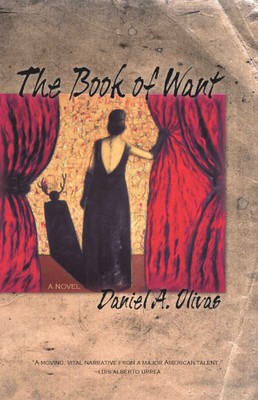
The Book of Want: A Novel
Daniel A. Olivas
144 pages, softcover: $16.95.
University of Arizona Press, 2011.

"I want ... I want everything. Everything that makes life beautiful." So says Conchita, one of the many characters in Los Angeles writer Daniel Olivas' The Book of Want. That Conchita is a voluptuous, amorous, unmarried 62-year-old with a penchant for tamales in the morning may tell you something about the world of this novel. The fact that her new boyfriend, Moisés, the widower next door, can levitate, or that her chain-smoking dead mother, Belén, visits her at night will tell you even more. Not to mention the notion that God sometimes communicates through a chicken.

The grandson of Mexican immigrants, Olivas is emerging as an important voice in the social and magical realist tradition of Luis Alberto Urrea, Gabriel García Márquez and Sandra Cisneros. In his sixth book and first novel, Olivas writes about the hard-to-explain and the miraculous. He explores loss and pleasure, the hunger for knowledge, questions about identity, sex, love, truth, money, transcendence.

The Book of Want is a tapestry of braided vignettes. The same scene may be described twice, from different perspectives. At times, the reader feels as if she is Belén, the omnipotent family matriarch, peering down at her progeny from heaven, watching their lives unfold, occasionally swooping down into their dreams to offer advice or warning. The plotlines are loose, fast and unpredictable. Some stories feel resolved; others leave you wanting more. Olivas plays with his narrative form, employing the techniques of meta-fiction: Witness the behind-the-scenes interview transcript between a reporter and some of the novel's fringe characters. Elsewhere, he writes out conversations via text-message, and in the chapter titled "How to Date a Flying Mexican," he breaks the narrative down into a series of rules. Rule number three: "Do not conduct Internet research on your lover's levitation skills. What you find will only cause great agitation and make you perspire profusely. Sometimes controlled ignorance is the only way to get through life." Olivas' prose is rich but simple, colorful and sometimes irreverent -- as whimsical and likeable as his characters. You will find yourself rooting for these people; you will even find yourself wanting for them.         --Kathleen Yale

Monday, June 20, 2011

You Got Me Buggin'

Looking for a summer thriller for the beach? A shiver-inducing read that will keep you up at night? A tale of murder and intrigue? Another reason to hate those mosquitoes swarming your gourd at this very moment?
Look no more.

Peep my latest book review for Portland's
The Oregonian.

WICKED BUGS
Amy Stewart
Algonquin Books of Chapel Hill
$18.95, 272 pages

"Hot and smoky, almost irreverent. Imagine W.C. Fields extinguishing a cigar on your tongue." This is not the colorful marketing slogan for an off-brand Texas hot sauce. It's pain connoisseur Justin Schmidt's description of a yellow jacket sting, ranked 2.0 on his Schmidt Sting Pain Index. And it doesn't actually sound so bad when compared to the "pure, intense, brilliant pain," of a level 4.0 bullet ant bite, akin to "fire-walking over flaming charcoal with a 3-inch rusty nail in your heel."

Intrigued? Read on.

For every human on Earth there are roughly 200 million insects. "We are seriously outnumbered." Amy Stewart respects that. She understands that insects do good. She knows they are integral parts of the food chain, that they pollinate the plants we eat and keep soil healthy. She knows we could not live without them. But she didn't write a book called "Wicked Bugs: The Louse That Conquered Napoleon's Army & Other Diabolical Insects" to extol their virtues. She wrote it to chronicle their most dastardly deeds. She wrote it to make you shudder and itch as you learn how the smallest of creatures can decimate forests and crops, collapse cities, thwart armies and inflict horror-movie levels of pain, suffering, festering disease and gruesome death upon millions of humans, while changing and shaping the course of history. She wrote this book to scare the bugs out of you.

Stewart is not an entomologist, but she is a consummate storyteller with a curious mind. Well-researched and written with characteristic wit, whimsy and reverence, "Wicked Bugs" is the perfect companion to her sordid 2009 best-seller, "Wicked Plants." Accompanied by Briony Morrow-Cribbs' gorgeous entomological etchings and drawings, the book is arranged in alphabetical order by species, and then divided into five dubious categories: Horrible, Painful, Destructive, Dangerous and Deadly. Each brief chapter offers up some fresh new hell.

And rest assured, there is something for everyone. Hypochondriacs will be pleased to know that those chronic headaches could be caused by a tapeworm curled up like a tumor inside their brains. World War II buffs will be delighted to learn of Japan's aborted operation "Cherry Blossoms at Night," which would have released plague-infested fleas over California. Science geeks will chuckle at the image of Darwin stuffing a bombardier beetle into his mouth for safekeeping when his hands were full. Engineers will be impressed by the degree to which termites weakened New Orleans's levees before Hurricane Katrina.

So this summer as you unpack your picnic basket in a haze of bug spray, just remember that mosquitoes have killed more humans than all wars combined. And for that, they probably deserve a little begrudging respect.  --Kathleen Yale

Monday, May 16, 2011

In This Light


"Davina, seventeen, and good enough for Julliard, but she wants to live in the wild, meet the snow leopard face-to-face, hear its still, small voice high in the Himalayas--she wants to follow caribou across mountains and tundra, record the sounds they hear on their way to the edge of the world--Davina wants to sing as elephants sing when they visit the bones of their ancestors." 

Peep my latest review for High Country News:

In This Light: New and Selected Stories
By Melanie Rae Thon
Graywolf Press, 2011

I wouldn't call Thon's haunting collection of short stories summer reading, but it is some damn fine writing. This woman has some serious chops.

The Painful Beauty of Love
By Kathleen Yale

Utah author Melanie Rae Thon maintains a seat beside fellow literary powerhouses Annie Proulx and Maile Meloy as she paints a portrait of a West that is at once desolate and tender. Written in fierce and unflinching prose, the stories in her third collection are about the dispossessed, the wild and searching. Every story is one that "could turn the hard of heart into believers, or the most trusting souls into cynics." In This Light will make you feel achingly old and cold to the bone as you link arms with the narrators, limping toward some sense of peace.

Thon slips into the skins of her flawed, long-suffering characters with astonishing ease and authenticity. Her characters are hungry, and for more than just food. Two runaway kids break into a house one night and gorge themselves. One says, "You don't know how it hurt us to eat this way, our shriveled stomachs stretching; you don't know why we couldn't stop." Her people are loners, addicts, outcasts, misfits stuck in too-small towns and reservations. They lose fingers to frostbite and steal coats that are too thin. In one story, Thon describes a horde of runaway children who haunt the woods outside of Kalispell, Mont., as being glued together "from broken sleds and headless dolls and bits of fur and scraps of plastic. Their bones were splintered wood. Their hearts were chicken hearts. Their little hands were rubber."

Though this collection weighs heavy on the heart, it also provides a strange comfort. For anyone who has wrestled, as her characters do, with the questions "Why were you whole? Why were they shattered?" this book flickers like a small campfire in a black night. If these characters are abandoned, they are also saved -- reaching for redemption, however imperfect. Thon describes a ragged, scarred Chippewa man as "scorched like the earth itself, a face that revealed the suffering of a thousand homeless Indians"  and then writes, "Yours was a face to love: without love, there was no way to look at you."

She bears witness, she takes names, she makes the details shine, but when specifics fade, when blame disappears, the human condition remains. To a homeless junkie kid, to a Vietnam vet, to a Holocaust survivor, to an orphaned teenage mother, to the reader of this book, pain is pain, love is love. Even the driest heart can still recognize beauty.