Tuesday, February 19, 2013

Sting City

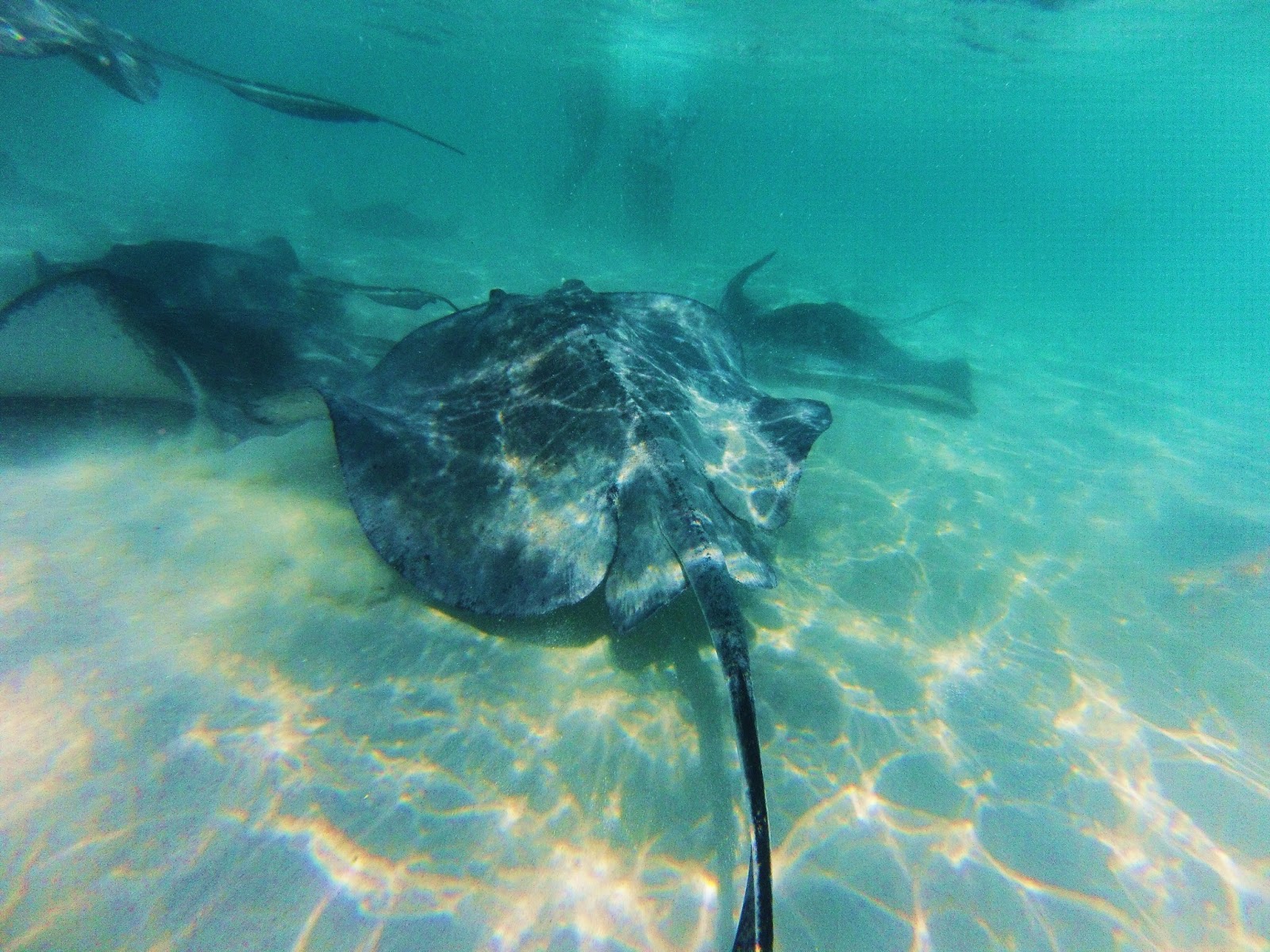
Ever wonder what it would feel like to hold a five-foot animate chicken cutlet? Curious about what an animal with a kisser like vacuum might look like? Want a little magic in your life? Fear no danger? Like getting mobbed by moving pancakes underwater? Appreciate flatness? Then I highly recommend you find a boat and make a sojourn to Stingray City, where the sea puppies live, and all your weirdo dreams can come true. I know mine did.


Southern stingrays (Dasyatis americana) can be found elegantly gliding around the ocean floor in tropical and subtropical waters from Jersey to Brazil. Their pectorals fins stretch out like stealth wings, trailing long, barbed tails behind. Diamond-shaped, their dorsal side is olive-hued and rough like a fleshy sandpaper, while their underbellies are a smooth, soft white. Their namesake stinger barb is tucked in about half way down their slim tails, and while its venom is not fatal to humans, a poke would sting like all hell. (Incidentally, Steven Irwin's fatal heart-sting freak accident was not at the fins of a southern ray.) 


This genial lot of wild rays hangs out at a large, naturally-occurring sandbar within a huge salt-water lagoon on the island's northwestern end, walled in by the barrier reef that rings the whole island. Apparently these usually solitary creatures cued in to a free meal years ago when they realized fisherfolk came to these shallow waters to clean their fish and toss the delicious guts overboard. And before you knew it hungry rays were coming out to the sound of boat engines like a flock of pancakes looking of syrup. Shortly there after, industrious humans realized they could make a buck by bringing animal-crazed tourists out to feed (mmm, calamari), pet, and generally love up on the now quite tame rays, and in the process make my decade.


Some of the rays have been coming around for years, like Rebecca, the biggest, oldest female, and Stumpy, who lost her tail, and Scarface of the distinct features... And when these gentle creatures whimple by, grazing your knee-backs and ruffling over your shoulders to hoover at the fish in your hand, you will not be able to cease laughing like a happy maniac, and you will fervently wish you were a mermaid just so you could keep one as a friend.


Wednesday, February 13, 2013

Terrapin Station

Well, technically you wouldn't call a sea turtle a terrapin, but tell that to Jerry. One of the best things we did on Grand Cayman was visit The Cayman Turtle Farm, a premiere breeding center for endangered green sea turtles. Chelonia mydas are dubbed green not for their outer color, but rather because the fat layer beneath their shell is green. For my part, let the record state I am uncertain if that means sort of a dull mossy green, or a bright, ectoplasm-type hue. Their range circles the globe in tropical and sub-tropical waters.


The breeding center is home to a number large, 500+ pound adult turtles who share a large saltwater lagoon equipped with a lounge studded with lava lamps, beaded curtains, soft lighting, and Barry White background music. No, that is a lie... but they are packed into a lagoon to facilitate orgies, I mean mating, but the lounge area is mostly just a sandy beach perfect for egg-laying. Mamas can lay 100-200 eggs in a go, and in the wild some may migrate as far as 1,6000 miles to reach their breeding grounds.


After incubating for a couple of months, tiny, adorable, bite-sized little baby turtles hatch in their sand pits and crawl their way to the sea. They are, as you may expect, extremely vulnerable to predators during the first several months of their lives, and get no help from mama, because she hit the road as soon as she buried her clutch. It is sad, but no surprise then, that only about one percent of the little turtlets make it to adulthood. This fact, combined with shoreline development (habitat loss), fishing net interference, predation (human and non-human), and the ill-effects of chemical pollution has served in securing the green sea turtle a spot on the Endangered Species list. In 2007 the green was also granted international protection under CITES.


Since its inception in 1968, the Cayman Turtle Farm has bred and released over 31,000 yearling turtles into the wild, and is the first facility to successfully release second generation greens (those bred, laid, hatched, and reared in captivity). Last year the center released the first of its satellite-tagged turtles, and now monitors individual movements via space technology and wizardry.


It is an incredible feeling to take a yearling in hand. Their shell pattern is delicate and unbelievable bright and crisp, a sunburst or seed husk painted on with a thin brush. Their front flippers are surprisingly strong, and tug at fingers hooked in armpits. You can soothe them with a gentle stroke of the chin. Mostly they casually drift around through the water, but are capable of zooming off at 30mph when they want a change of scenery. 


They are impossible not to root for.

Monday, February 11, 2013

He Hath Founded It Upon The Seas

Yesterday I returned from a lovely week of sand, sea, family, and rum on Grand Cayman. Returned to the snow, naturally, with the ocean still in salting my hair. This here is the first installment of usual suspects encountered. All were quite congenial. Except for the cockroaches, who shall remain nameless.

A wee crablet
Demonstrating the power of suction, and creepin'

Went a courtin'

Dove Rae Me

Nice beret, Luc

Still life with Chuckles

The long shanks

And now she's blushing

Just another goth kid

Forget something, blue-throated anole?


Monday, January 21, 2013

Mephitis Mephitis

Yesterday we were heading into the Park for a ski, when lo! my day was made by a special wildlife sighting. Naturally I have seen a savage number of poor roadkill skunks over the years, and even the sad and smelly remains of some in Yellowstone wolf scat, but surprisingly, I've only ever seen one live individual in the wild. Until yesterday... when we saw this little duffer loping over snowdrifts between lake shore and road.

Le Pew
My first thought, well, it wasn't so much a cohesive thought so much as a bombastic emotional reaction/squeal of pure glee, was look! A skunk! A skunk! So fuzzy! Look! Look! That bushy tail! Skunk! My second thought was more akin to, Must. Get. Out. Of. Truck. Must. Get. Close. To. That. Fuzzy. And soon enough I was out of the vehicle, jogging along next to the skunk for a few hundred meters, grinning in breathless delight. Some of you may question my judgement, but let me remind you that while they see and hear quite nicely, skunks have pretty terrible eyesight, and the little guy could barely see me. (This poor vision is partially to blame for all those fatal automobile encounters.)

Just look at those little pink slippers!
My third thought was that Walt Disney is a liar. Remember in Bambi, when Flower gets all sleepy and goes into hibernation for the winter? Yeah, well, that just wasn't jiving with Mr. Bushypants here. Striped skunks don't actually hibernate. They go into a state of torpor--a generally inactive, denned up period of rest, though they may come above ground a couple of times to poke around and empty their scent glands. Also, Walt, deer don't get twitterpated in spring, okay. They mate in the fall. Do your homework.


Friday, January 4, 2013

Make No Little Plans

Oh, Shedd Aquarium, how I've missed wandering among your wonders...

A little white whale on the go.
Hardly scaling back.
Not your typical sea monkey.
Sauron's got nothing on this one.
Peep show.
Flotsam or Jetsam?
Dude knows how to lurk. 
Check out the big brain on Brad!
Caimans can creepers.
Animated doilies?
Ruffle your bustle.
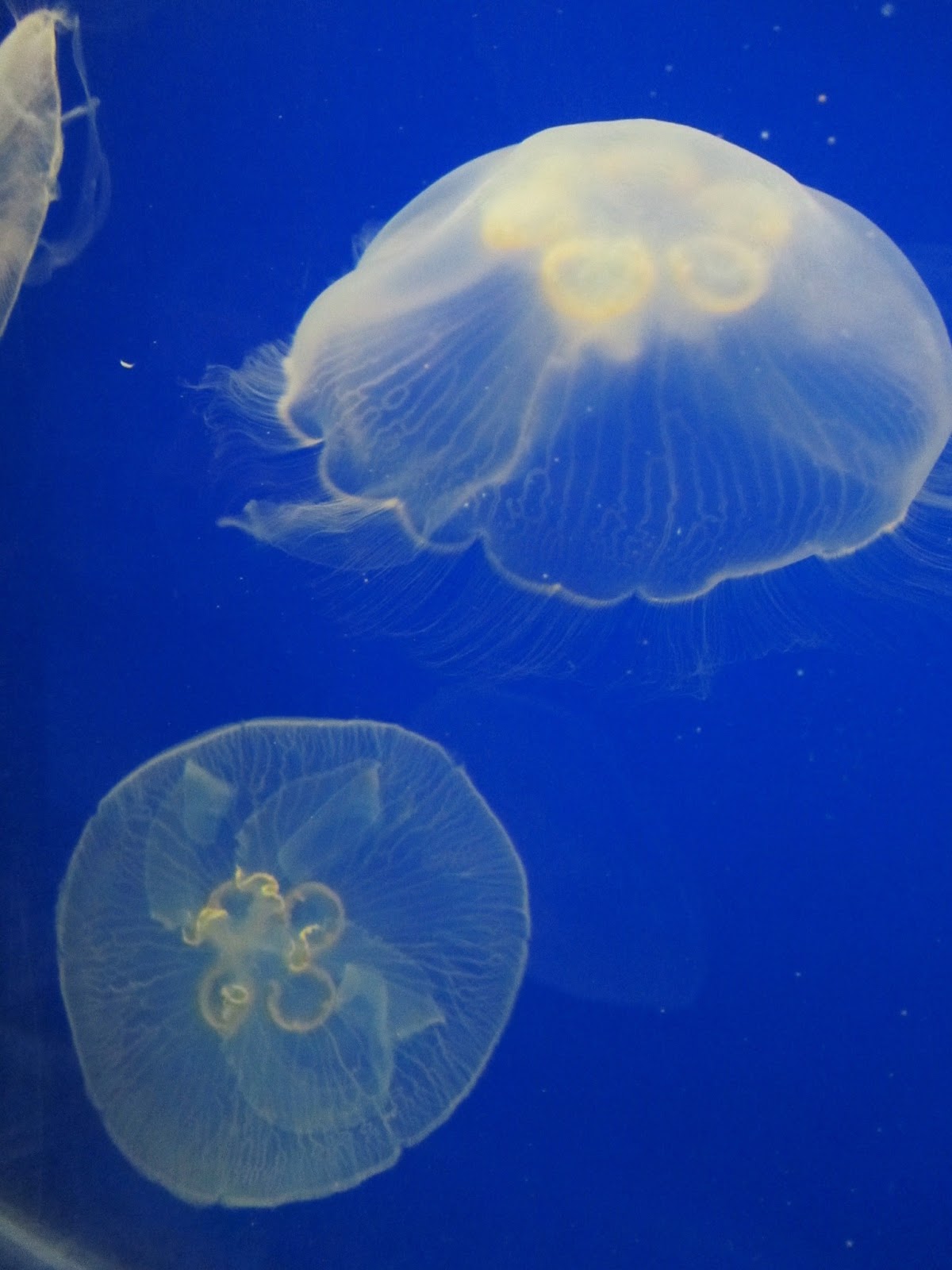
Medusa. Sea nettle. Jelly bonnet. Bloom.
Flapper fringe.
Dance of the Sugar Plum Faerie.
Roxanne, you don't have to wear that dress tonight.
Look familiar?
Do not disturb.

Wednesday, December 12, 2012

The Most Famous Deer of All

Rudolph, letting you know it is cool to be different
'Tis the holiday season, and whether or not you celebrate Christmas specifically, no doubt you have been bombarded with Christmas music since Thanksgiving. I dabble in said holiday fare, but don't indulge so much as to ban any non-seasonal tunes, like some folks I know. And by know I mean am related to. Anyway, I was listening to the radio the other day and of course Rudolph came on, because it had been 45 minutes, and I was struck, once again, by how mean the other reindeer were. Total bitches! Even his own parents try to hide who he really is! And when Rudy finally rises to red-beaked glory and saves the day, there is never really any just recompense from those haters.

Typical. My (indirect) point is, I've been thinking about reindeer, and not just the bitchy kind. I figure you good people think about reindeer too, sometimes. But how much do you know about them? In the spirit of giving, I give you . . .

Ten! Facts! About Reindeer!:

1. Semantics
Reindeer = Caribou = Rangifer tarandus

2. Nice Rack
Caribou have the second biggest (but definitely most crazy) antlers of any Cervid, behind the moose. They are the only Cervid species that practices equal growth rights: both males and females grow antlers. Interestingly enough, older males drop their antlers in the early winter, young males lose theirs in early spring, and  females keep theirs until the summer. So all of Santa's reindeer must be ladies then, no? Not at all surprisingly, their ground up antler powder is a big hit in the aphrodisiac-centered, horned up Asian market.

3. Glow-in-the-Dark Pee?
Okay, not exactly, but it is thought that caribou are the only mammalian species that can see ultraviolet light. This megavision helps the animals to pick out useful things that might otherwise blend in with the monochrome tundra landscape. Things like urine.

4. Big Nose, Fancy Toes
Their huge, smoochable schnozes are equipped with cavernous nostrils that help to warm inhaled air before it enters their lungs. In the winter their normally spongy foot pads harden and shrivel up, exposing the sharp edges of their hooves. This helps with traction on ice, and provides a handy shovel for digging out snow in hopes of grazing. I also tend to shrivel up in the winter, although I have yet to notice a positive correlation on my traction or eating habits.

5. Walkathon
Some North American herds migrate the furthest distances of any terrestrial mammal. They can travel over 3000 miles in a season. Total badasses.

Delicious!
6. Good Eatin'
Reindeer eat a lot of lichen. Reindeer lichen, specifically. They'll also tear into some mushrooms, and rumor has it, the occasional lemming. But I don't know about that. Northerly humans love to nom on reindeer, and the animal (both wild and semi-domesticated) has been a seminal human food source for centuries. Most recently in canned meatball form. I am sure Sarah Palin loves them.

7. Where in the World?
Caribou range pretty much all over the Holarctic zone, across tundra and boreal forest habitats. Once abundant, their numbers are in decline due to habitat degradation and the biggest bummer-trump of all, climate change. Read more about hard times in reindeer land in Gretel Erhlich's fine National Geographic piece on Russia's reindeer herders.

8. I Vant Your Blood
Apparently colonial Frenchies used to mix the blood of caribou with a little hard booze and drink it down to fight off the cold. And perhaps anemia. The modern incarnation of this Caribooze substitutes red wine for blood and adds a bit of sugar or maple syrup to the existing whiskey. Naturally the Quebecois love this sort of abomination.

9. The Elite Eight
Fact: The names "Donner" and "Blitzen" are derived from Germanic words meaning Thunder and Lightening, which makes a strange kind of sense, but leaves Vixen and Cupid as the most questionably-named dudes on the crew, and possibly in reindeer history.

10. Born Free
There are lots of free-ranging, wild herds of reindeer in the world. So too are there semi-domesticated herds. Arctic and Semi-Arctic peoples have been shuffling these fuzzies around for centuries, using their hides, meat, antlers, and even milk, though such animals weren't really considered to be domesticated, and they weren't bred in captivity. Its more like they were partially tamed. Today some nomadic herders track their herds using satellite telemetry. Maybe that is how Santa keeps tabs on his during the off-season...